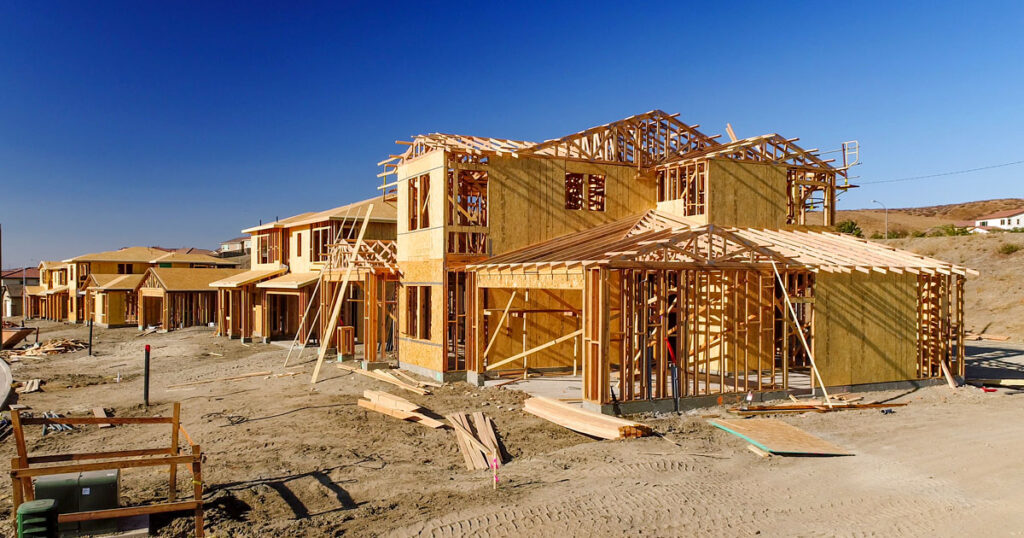
A proposal from the Trump administration to extend mortgage terms to 50 years promises lower monthly payments but threatens to trap borrowers in decades of debt while enriching lenders and inflating home prices
The Trump administration’s recent proposal to introduce 50-year mortgages as a solution to America’s housing affordability crisis has ignited fierce debate among economists, housing experts, and consumer advocates who warn the plan could worsen the very problem it claims to address.
Federal Housing Finance Agency Director Bill Pulte called the concept “a complete game changer” in November 2025 when announcing the administration was developing the product. But housing economists and mortgage industry analysts have characterized it differently: as a political gesture that creates an illusion of action while avoiding structural reforms, ultimately benefiting banks and home sellers at the expense of borrowers who will pay dramatically more over the life of their loans.
“This is not a good idea,” said Richard Green, professor of finance and business economics at the University of Southern California’s Marshall School of Business. Green’s assessment reflects a broader consensus among housing policy experts who note that extending mortgage terms does little to address the fundamental supply shortage driving unaffordability.
The Affordability Illusion
The arithmetic behind 50-year mortgages reveals why experts are skeptical. Using current market conditions—a median home price of $415,200, a 6.17% interest rate, and a 10% down payment—the monthly payment on a 30-year mortgage would be approximately $2,288. A 50-year mortgage on the same home would reduce that payment to roughly $2,022, according to analysis by the Associated Press.
That $266 monthly savings, however, comes at an extraordinary long-term cost. A borrower would pay approximately $389,000 more in interest over the life of a 50-year loan compared to a 30-year mortgage, the AP calculated. UBS Securities analyst John Lovallo reached a similar conclusion, estimating that extending the loan duration from 30 to 50 years could double the dollar amount of interest paid on a median-priced home.
“As a percent of total home price, a 50-year mortgage results in total interest paid being approximately 225% of the total home price,” UBS Chief Investment Office reported in November 2025. “This is more than twice the level under a 30-year mortgage.”
The equity-building problem compounds the issue. Under a 50-year mortgage structure, only 4% of the mortgage principal would be paid off in 10 years, and just 11% would be retired after 20 years, according to UBS analysis. This compares unfavorably to a 30-year mortgage, under which 46% of the mortgage is retired by year 20.
“You’re going to be paying almost all interest for the first 10 years. It’s really akin to an interest-only loan at that point,” explained Chris Hendrix, senior vice president for the home loans unit of NBKC Bank in Kansas City.
The Political Calculus
The 50-year mortgage proposal emerged against a backdrop of extraordinary housing market pressure. The average age of first-time homebuyers in America climbed to a record 40 years old in 2024, according to the National Association of Realtors—a shocking development that means today’s typical first-time buyer is as close to collecting Social Security as to graduating high school.
This demographic reality exposes a central weakness in the 50-year mortgage concept: a 40-year-old borrower would be 90 when the loan matures, well beyond the current U.S. life expectancy of approximately 79 years.
“It’s typically not a goal of policymakers to pass on mortgage debt to a borrower’s children,” Mike Konczal, senior director of policy and research at the Economic Security Project, told the Associated Press.
The proposal requires significant legislative changes. Under the Dodd-Frank Act, mortgages longer than 30 years don’t meet the criteria for qualified mortgages, meaning they’re ineligible for backing by Fannie Mae and Freddie Mac. This makes them far more difficult for lenders to securitize and sell to investors. Regulatory changes to enable 50-year mortgages could take up to a year and would require congressional approval, according to Jaret Seiberg, a financial services and housing policy analyst at TD Cowen.
Housing policy experts note that the 30-year fixed-rate mortgage emerged from New Deal-era reforms designed to create a standardized mortgage that borrowers could afford and pay off during their working years when the average American lifespan was 66 years. The product became uniquely American, setting the United States apart from other developed nations.
“The 30-year term has always been the sweet spot in this country. And that sets us apart from every other country. And we should not just try to eliminate that or undermine that,” said Bruce Marks, CEO of the Neighborhood Assistance Corporation of America, a nonprofit that helps people obtain low-cost mortgages.
Who Benefits: The Bank Profit Equation
The financial incentives behind promoting ultra-long mortgages become clear when examining how interest revenue compounds over extended periods. A simple calculation demonstrates the mathematics: on a $360,000 loan (90% of a $400,000 home), the difference between 30 and 50 years means 240 additional monthly payments.
Matthew Graham, chief operating officer at Mortgage News Daily, noted that there is not currently a secondary market for 50-year loans, “nor would a robust secondary market be cultivated any time soon.” This means that “in addition to the extremely low amount of principal paid down in earlier years of the loan, the interest rates would also be quite a bit higher than 30-year loans—a double whammy for those with any hope of building equity.”
The interest rate differential matters significantly. The average rate on 15-year fixed mortgages is currently 66 basis points lower than on 30-year fixed mortgages, according to the Mortgage Bankers Association. This pattern suggests that 50-year mortgages, given their extended risk period for lenders, would command even higher rates than 30-year products.
Research from the Federal Reserve on mortgage demand elasticity provides insight into how lenders price risk over time. A 2014 study by Anthony DeFusco and Andrew Paciorek found that a 1 percentage point increase in mortgage rates reduces first mortgage demand by between 2 and 3 percent. This relationship between rates and demand gives lenders significant pricing power when introducing novel products with limited competition.
Historical precedent from Japan’s experiment with extremely long mortgages offers a cautionary tale. During Japan’s 1980s real estate bubble, lenders introduced 100-year, three-generation mortgages. A 1995 academic examination published in the Journal of Real Estate Finance and Economics concluded that “the 100-year mortgage has failed to increase the affordability of homes. Instead, affluent homeowners are more likely to employ long-term mortgages as an estate-planning tool to reduce inheritance taxes.”
More recently, Japan has faced a crisis of elderly mortgage holders unable to pay off their homes. According to 2020 analysis by Nikkei, the average age of Japanese mortgage borrowers had risen to 40.4, with many reaching retirement age while still carrying substantial debt. “More and more people are taking advantage of low interest rates to take out loans without down payments that really stretch their financial limits,” said Aiko Takahashi, president of the Mortgage Loan Problem Support Network, a Japanese nonprofit organization.
The Price Inflation Mechanism
Perhaps the most insidious consequence of extending mortgage terms lies in how such products affect overall home prices—a dynamic that housing economists say could make housing less affordable even as monthly payments marginally decrease.
The mechanism works through a straightforward supply-and-demand relationship: when monthly payments decrease through extended loan terms, more buyers can qualify for mortgages at higher price points. This increased purchasing power doesn’t create additional housing supply; instead, it enables buyers to bid against each other for the same limited inventory, driving prices upward.
“Proposals to help home buyers—whether it’s this 50-year mortgage or whether it’s Kamala Harris’s proposal in her presidential campaign to give money to first time homebuyers—the main beneficiaries are actually the people selling houses,” explained Harvard economist John Campbell on NPR’s Planet Money. “Because given the supply, if you make it easier for buyers, they’re bidding against each other for the same supply. The price is gonna go up. The winner is gonna be the person selling.”
Research on housing supply elasticity supports this concern. A 2020 study published by the Bank of England and Norges Bank found that U.S. housing supply has become significantly less elastic since the Great Recession, meaning price increases have a diminished effect on stimulating new construction. When supply is inelastic, demand-side interventions like easier credit primarily translate into price increases rather than additional housing units.
Tyler Cowen, economist and author of the influential blog Marginal Revolution, ran the 50-year mortgage concept through advanced modeling and concluded it would “likely lower monthly payments but raise house prices, slow equity build-up (and raise default risk in downturns), and increase interest-rate risk in the financial system.”
This price inflation dynamic has precedent in other countries where longer mortgages gained traction. In the United Kingdom, where mortgage terms have extended significantly, housing affordability has worsened despite—or perhaps because of—the availability of longer loans. According to the Office for National Statistics, the median home in England cost 7.7 times the median earnings of a full-time employee in 2024. In London, median house prices reached 12 times the median salary.
A 2024 study by Morta, a mortgage technology provider, found that lower-middle-class households are now unable to afford homes in 42 out of 47 major UK cities, with the affordability gap continuing to widen despite increasingly long mortgage terms. In 2022, half of first-time buyer mortgages in the UK had terms longer than 30 years, compared to just a quarter in 2012.
The Financial Literacy Gap
The appeal of 50-year mortgages to financially distressed buyers raises concerns about whether borrowers fully understand what they’re accepting. Academic research consistently demonstrates that many consumers struggle to evaluate complex mortgage products, particularly regarding how interest compounds over extended periods.
A 2009 study published in the Journal of Financial Economics found that only about one-third of Americans comprehend interest compounding or the workings of credit cards. Researchers Annamaria Lusardi and Peter Tufano concluded that “debt illiteracy is widespread” and strongly correlated with costly financial behaviors.
Research specifically examining mortgage choices reveals disturbing patterns. A study published in the Journal of Financial Services Research in 2014 found that “financially illiterate individuals are more likely to exhibit poor credit card behaviors and use high-cost debt instruments.” When applied to mortgage decision-making, low financial literacy correlates with choosing products that minimize upfront payments while maximizing long-term costs.
A 2017 study in Economic Policy examined mortgage choices in the United Kingdom and found that “poor financial literacy and present bias raise the likelihood of choosing” alternative mortgage products with back-loaded payments. The research concluded that borrowers with lower financial literacy were significantly more likely to select mortgages that appeared affordable on a monthly basis but proved extremely costly over their full term.
“Individuals with lower levels of debt literacy tend to transact in high-cost manners, incurring higher fees and using high-cost borrowing,” according to research published by the National Bureau of Economic Research. The study estimated that “as much as one-third of the charges and fees paid by less knowledgeable individuals can be attributed to ignorance.”
Dutch research published in the Journal of Banking & Finance in 2016 found that “homeowners with relatively low debt literacy are more likely to take out traditional mortgages with principal repayments over the maturity of the loan. Riskier mortgages are more prevalent among homeowners with a better understanding of loan contracts.” This counterintuitive finding suggests that sophistication in financial products doesn’t always align with choosing lower-risk options—sophisticated borrowers may rationally take on risk for potential rewards, while less literate borrowers may be steered toward seemingly simpler products that are actually more expensive.
The concern with 50-year mortgages centers on whether buyers truly comprehend that their $266 monthly savings comes at the cost of paying more than twice as much in total interest—money that could otherwise build wealth, fund retirement, or provide financial security.
Life-Cycle Vulnerabilities
The extended timeframe of 50-year mortgages creates unique vulnerabilities tied to normal life-cycle income patterns and retirement realities. Most workers see their earning power peak in middle age and decline as they approach and enter retirement. A mortgage that extends 20 years beyond the traditional 30-year term spans a period when many borrowers will experience reduced income.
With the average first-time buyer now 40 years old, a 50-year mortgage means making payments until age 90. But Americans retire, on average, in their mid-60s. This creates a gap of roughly 25 years during which mortgage payments must come from fixed incomes—Social Security, pension benefits, and retirement savings—rather than employment wages.
The Consumer Financial Protection Bureau’s 2024 data shows that housing costs consume approximately 39% of median household monthly income under current conditions. For retirees on fixed incomes, maintaining such payment levels could prove impossible, particularly if health care costs increase or unexpected expenses arise.
“If I had the option where I’m renting the home or I can get a 50-year mortgage and I’m not going to gain much equity for a couple of years, I would still take that deal versus renting,” argued Phil Crescenzo, vice president at Nation One Mortgage Corporation, who defended the concept as a “starting point” from which borrowers could later refinance.
But this refinancing assumption contains its own risks. Refinancing requires qualifying under prevailing interest rates and underwriting standards, having sufficient home equity, and maintaining strong credit. None of these conditions are guaranteed, particularly for borrowers who struggled to qualify initially or who experience financial setbacks during the loan term.
Job loss, medical emergencies, disability, divorce, or business failures—all common life events—become exponentially more consequential when they occur during an ultra-long mortgage term. Research on mortgage defaults consistently shows that life disruptions, not simply rising interest rates, drive most foreclosures. A 50-year time horizon dramatically expands the probability that borrowers will experience such disruptions.
Historical data from Japan’s long-term mortgage experiment illustrates these dangers. By 2020, many Japanese borrowers who took out extended mortgages in their late 30s or early 40s found themselves unable to complete repayment before or during retirement. Nikkei’s analysis found that “households with more than 10 million yen in mortgage debt at age 60 are more likely to be on ‘default reserve,’ meaning they will have trouble making their payments.”
Foreclosure, Default, and the Used-Home Market
The combination of minimal equity accumulation, life-cycle income decline, and the sheer duration of 50-year mortgages raises the specter of a housing market increasingly characterized by default, foreclosure, and rapid turnover of ownership.
When borrowers build little equity over the first two decades—only 11% under UBS estimates—any decline in home values can quickly push them underwater, owing more than the property is worth. This vulnerability becomes particularly acute during economic downturns when home prices tend to fall while unemployment rises.
“Can you imagine paying on a mortgage 15 years, a housing correction occurs and suddenly you are under water?” asked housing analyst Wolf Richter in his analysis of the proposal, published on Wolf Street. The question highlights a fundamental instability: borrowers who have paid for 15 years on a 50-year mortgage have barely reduced their principal balance, making them extremely vulnerable to price corrections.
Such corrections are not hypothetical. The 2007-2008 housing crisis saw home values plunge by 30% or more in many markets. Borrowers who purchased near the peak using creative financing found themselves trapped, unable to refinance, sell, or continue making payments. Foreclosures cascaded through neighborhoods, creating downward pressure on surrounding property values and triggering more defaults.
The prospect of widespread underwater mortgages on 50-year loans could create a market dynamic where homes become repeatedly repossessed and resold, cycling through multiple owners without any of them achieving the traditional American Dream of home equity and eventual ownership. Financial writer Wolf Richter evoked this image starkly, comparing the potential outcome to “used cars turned over on Broadway”—a reference to the constant churn of inventory through used car dealerships where vehicles are sold, repossessed, and resold in endless succession.
This scenario benefits one constituency clearly: investors with capital to purchase foreclosed properties at discounted prices. As individual homeowners fail to complete ultra-long mortgages, institutional investors and real estate investment trusts could systematically accumulate housing stock, converting previously owner-occupied homes into rental properties. This dynamic has already accelerated since the 2008 crisis, with large investment firms purchasing thousands of single-family homes to create rental portfolios.
“One change [I] would like to see is any move that might limit individual homebuyers from being outbid by large corporations that add homes as part of their investment portfolios,” said Marks of the Neighborhood Assistance Corporation of America, expressing concern about how extended mortgages might facilitate this transfer of ownership from individuals to institutions.
International Lessons and Alternative Models
The United States is not the first nation to consider extremely long mortgage terms as a response to housing affordability challenges, and the experiences of other countries offer instructive lessons.
Japan’s experience with 100-year mortgages in the 1980s and 1990s provides the most dramatic cautionary tale. These multi-generational loans were marketed as making homeownership accessible, but they coincided with a catastrophic real estate bubble. As Japanese housing prices soared, lending standards deteriorated, with banks offering loans that assumed eternal price appreciation.
“As the bubble progressed, lender expectations improved, leading to excessively loose credit standards. New 100-year, three-generation mortgages popped up. Grandkids would be paying off their parent’s parent’s mortgage,” according to research on Japan’s financial crisis published by DataDrivenInvestor in 2023.
When the bubble burst in the early 1990s, the combination of falling prices and extended mortgage terms created a financial disaster. Borrowers defaulted in droves as they found themselves deeply underwater on properties worth far less than their outstanding debt. Banks accumulated massive unwanted real estate holdings as debtors went bankrupt. The Japanese economy entered a deflationary period from which it has never fully recovered—now often called the “Lost Decades.”
A 1995 academic study examining Japan’s 100-year mortgage concluded it “has failed to increase the affordability of homes,” instead serving primarily as an estate-planning tool for wealthy families. The lesson: ultra-long mortgages don’t solve affordability when supply is constrained; they merely change the financial structure while benefiting lenders through extended interest collection.
Sweden experimented with extremely long mortgage amortization periods, with terms reportedly reaching 140 years before regulators imposed a cap at 105 years in 2016. These products function essentially as interest-only loans in perpetuity, with borrowers never realistically expecting to pay off the principal. The Swedish housing market has been characterized by high prices relative to income and concerns about household debt sustainability.
The United Kingdom offers a more recent example of extending mortgage terms without reaching Japan’s extremes. As affordability worsened, British lenders progressively lengthened standard mortgage terms from 25 years to 30, 35, and even 40 years. In 2022, half of first-time buyers chose terms longer than 30 years.
Yet this trend toward longer mortgages has not improved affordability in the UK. Housing costs as a multiple of annual income have worsened significantly. According to official statistics, houses in England in 2024 cost 7.7 times median earnings, while London homes cost 12 times median salary. For lower-middle-class households, 42 of 47 major UK cities had median home prices exceeding what these earners could afford even with extended mortgage terms.
Canadian mortgage expert Penelope Graham of Ratehub.ca noted that Canada deliberately moved in the opposite direction from the extended-term trend. After experimenting with 40-year mortgages, the Canadian government “reined in the amortization period back to its current 25 years for insured borrowers and 30 years for uninsured,” she explained to CBC News. “The reason for that is, the longer a mortgage is, the more inherently risky and expensive it is.”
The Supply Solution Nobody Wants to Implement
Every economist interviewed for this article emphasized the same point: 50-year mortgages do not address the fundamental cause of America’s housing affordability crisis, which is insufficient supply.
The United States faces an estimated structural shortage of 7 million housing units, according to UBS research published in October 2024. This gap between the number of households and available housing units has been growing for decades, driven by restrictive zoning regulations, lengthy permitting processes, NIMBYism (Not In My Back Yard opposition to new construction), and rising construction costs.
“A 50-year mortgage does nothing to solve one critical issue when it comes to housing affordability—the lack of supply of homes,” noted reporting from Euronews. States like California and cities like New York have recently passed legislation to accelerate construction, but these efforts remain modest relative to the scale of the shortage.
UBS researchers proposed a different solution entirely: massive public investment in manufactured wall panels to improve construction productivity. Their analysis suggested this approach could generate up to a 30% reduction in framing time and 20% reduction in waste, potentially lowering construction costs enough to stimulate meaningful supply increases. Such structural reforms, however, require political will and upfront public investment rather than the political theater of seemingly solving affordability through financial engineering.
The pattern is familiar from other attempted demand-side interventions. In her presidential campaign, Vice President Kamala Harris proposed giving grants to first-time homebuyers. Economists responded with the same criticism now leveled at 50-year mortgages: without increasing supply, such measures primarily benefit sellers by enabling buyers to bid against each other at higher prices.
“Given the supply, if you make it easier for buyers, they’re bidding against each other for the same supply. The price is gonna go up. The winner is gonna be the person selling,” Harvard’s Campbell explained.
Supply constraints stem from multiple sources. Local zoning regulations prohibit dense development in most American residential neighborhoods, restricting builders to single-family homes on large lots. Environmental review processes can delay projects for years. Skilled construction labor shortages limit how quickly builders can work even when projects are approved. Materials costs have risen, partly due to tariffs on imported products like steel, lumber, and other commodities essential to homebuilding.
The Trump administration has pressured homebuilders to accelerate construction, claiming they are “sitting on an oversupply of empty lots.” Builders contest this characterization, pointing to high costs for land, labor, and materials as limiting factors. Regardless of where fault lies, the fundamental problem remains: America is not building enough homes to meet demand, and no amount of financial engineering can substitute for actual construction.
Political Theater and Economic Reality
In the days following the initial announcement of the 50-year mortgage proposal, President Trump appeared to retreat from the idea, telling Fox News host Laura Ingraham that it was “not a big deal” and “might help a little bit” after Ingraham pressed him on criticism from his own supporters. This rhetorical backpedaling suggests the proposal may have been primarily a trial balloon—a political gesture designed to show action on housing affordability without committing to the difficult structural reforms that might actually improve access.
This pattern typifies a recurring dynamic in housing policy: politicians propose demand-side interventions that create the appearance of help while avoiding the politically difficult work of increasing supply through zoning reform, infrastructure investment, and regulatory streamlining. Demand-side measures tend to concentrate benefits on visible, sympathetic constituencies (aspiring homeowners) while dispersing costs broadly (slightly higher prices for all buyers). Supply-side reforms create diffuse benefits (lower prices eventually) while imposing concentrated costs on organized constituencies (existing homeowners who oppose nearby development, environmental groups concerned about sprawl, wealthy neighborhoods resistant to density).
The result is a political economy where the path of least resistance leads to policies that sound helpful but may actually worsen long-term outcomes. Fifty-year mortgages fit this pattern perfectly: they promise immediate relief through lower monthly payments while obscuring the massive long-term costs in interest payments, forgone equity, and housing price inflation.
Director Pulte’s enthusiastic endorsement of 50-year mortgages as “a complete game changer” came from someone whose family made its fortune in homebuilding—an industry that stands to benefit from any policy that enables more buyers to qualify for mortgages, regardless of whether those buyers ultimately build wealth or remain trapped in debt. This alignment of industry interests with policy proposals raises questions about whose interests such innovations truly serve.
Who Bears the Suffering?
The 50-year mortgage debate ultimately returns to a fundamental question about how societies distribute the costs of economic dysfunction. When housing becomes unaffordable due to supply constraints, regulatory barriers, and decades of underbuilding, someone must bear the suffering: either current homeowners through lower prices, existing residents through increased density and development, taxpayers through subsidies for construction, or aspiring buyers through exclusion from homeownership.
The 50-year mortgage represents a choice to impose that suffering on the most vulnerable participants in the housing market: young, first-time buyers with limited financial resources and potentially limited financial literacy. It allows them to participate in homeownership, technically, but only by accepting financial arrangements that transfer wealth away from them—to lenders through decades of interest payments, to sellers through inflated prices, and to future versions of themselves who will struggle under the burden of a mortgage that outlasts their earning years.
“It will have no legs because they’ve tried to do a 40-year term that has not taken off,” predicted Marks of the Neighborhood Assistance Corporation of America. “The 50-year proposal is even worse. It will go nowhere. Borrowers will not do it. They see through that. They will know that they will not generate any wealth.”
Yet history suggests that when buyers face the choice between renting indefinitely and accepting unfavorable mortgage terms, many will choose the latter, particularly if they lack the financial sophistication to calculate lifetime costs or if they optimistically assume they will refinance before the worst consequences materialize. The very conditions that make 50-year mortgages appealing—high prices, limited supply, financial distress—also create vulnerability to accepting bad deals.
This is not a failure of individual decision-making. It is a failure of policy that presents ultra-long mortgages as a solution when the actual solution—building millions more housing units—requires confronting entrenched interests and overcoming political obstacles that lawmakers find it easier to avoid.
The 30-year fixed-rate mortgage emerged from the New Deal as a deliberate policy choice to enable middle-class homeownership and wealth building. The product was designed so borrowers could pay off their homes during their working years and retire with equity and housing security. Extending that term to 50 years represents a reversal: a policy that enables participation in homeownership only by sacrificing its wealth-building potential and stretching debt across an entire lifetime.
Whether through intent or indifference, the effect is the same: economic pain inflicted on those least able to bear it, in service of avoiding the difficult but necessary work of actually solving the housing crisis through increased supply and structural reform.
The 50-year mortgage is not an affordability solution. It is a mechanism for monetizing desperation, converting the anxiety of housing insecurity into decades of interest payments for lenders and artificially elevated prices for sellers. It is, in the most literal sense, a political choice about who suffers—and a choice that, once again, directs that suffering downward onto those with the least power to resist it.