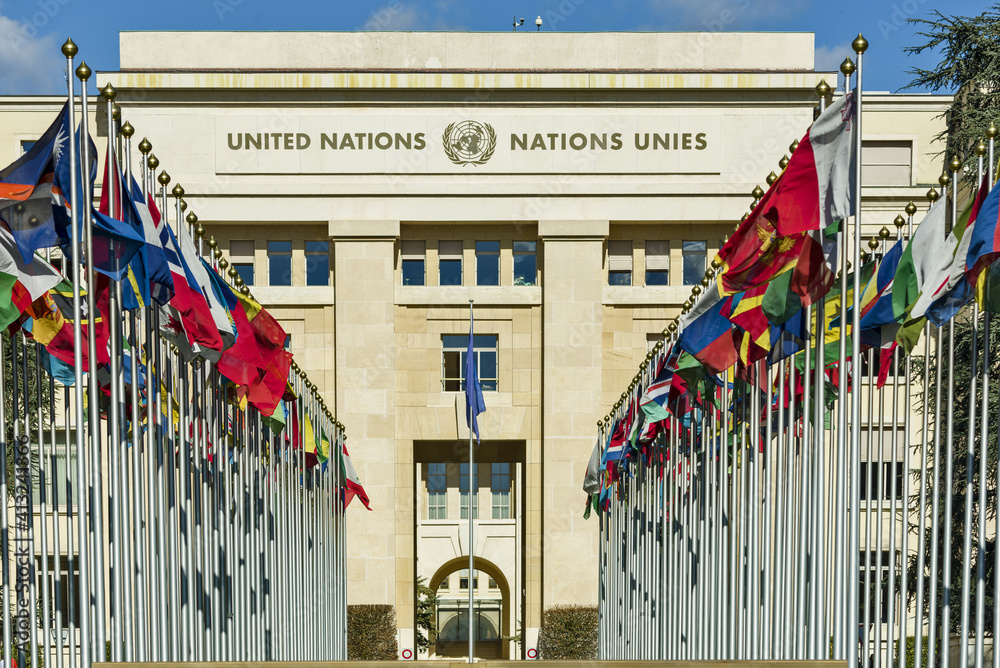
On December 10, 2025, the United States stood alone at the United Nations, casting the sole vote against a resolution protecting humanitarian workers in conflict zones. One hundred fifty-three nations voted in favor. Six abstained, including Russia, North Korea, and Israel. One nation voted no.
The United States.
The vote came during the deadliest period for humanitarian workers in recorded history. In 2024, 383 aid workers were killed globally—a 31% increase from the previous year. Nearly half died in Gaza. By mid-August 2025, another 265 had been killed, putting the year on pace to shatter the previous record. State actors, not insurgent groups, are the most common perpetrators of this violence.
This was not just a vote. It crystallized a troubling realignment in American foreign policy—one that increasingly alienates allies, accommodates adversaries, and reframes international engagement through the lens of domestic culture war politics.
A Resolution Adopted Everywhere Except Washington
The resolution, titled “Safety and Security of Humanitarian Personnel and Protection of United Nations Personnel” (A/80/L.18), has been introduced annually for nearly three decades, most often by the European Union. Denmark facilitated the 2025 version on the EU’s behalf, continuing a 27-year tradition of consensus-driven reaffirmation that humanitarian workers—the doctors, aid distributors, and emergency responders who venture into the world’s most dangerous places—deserve protection under international law.
The text acknowledged the growing risks facing aid workers in increasingly complex and militarized environments. It emphasized host states’ responsibility under international law to protect humanitarian and UN personnel. It contained no enforcement mechanism, sanctions language, or naming of specific states. Its purpose was declarative and normative—reasserting principles that, until recently, commanded near-universal support.
The final vote tally underscored American isolation. Burundi, North Korea, Fiji, Israel, Papua New Guinea, and Russia abstained. None joined Washington in opposition.
The same day, the United States also voted alone—162 to 1—against a resolution on international cooperation for humanitarian assistance in natural disasters.
The Administration’s Justification
Jonathan Shrier of the U.S. Mission to the United Nations called the resolution “performative” and objected to what he termed “radical gender ideology” in the text. The administration, he said, would not support efforts that “distract from and directly undermine the real work to protect and promote the rights of women and girls around the world.”
“The United States remains a strong proponent of advancing the rights and protections of women and girls to advance real equality between biological men and women,” the statement read, while criticizing what it called “divisive and pointless language.”
The same rationale was used to justify opposition to the disaster relief resolution, which the administration framed as part of a broader “donor-recipient industrial complex” entangled with climate policy and frameworks it opposes.
What the statement did not address was the timing. Nor did it address the unprecedented death toll the resolution was responding to.
A Humanitarian Crisis Measured in Bodies
The data from the Aid Worker Security Database and the UN Office for the Coordination of Humanitarian Affairs paint a picture of systematic violence. In 2024, beyond the 383 killed, 308 aid workers were wounded, 125 were kidnapped, and 45 were detained. The geographic distribution tells its own story:
- 181 deaths in Palestinian territories
- 60 in Sudan (more than double the previous year)
- 20 in Lebanon (compared to zero in 2023)
- 14 each in Ethiopia and Syria
- 13 in Ukraine (up from six)
Violence against aid workers increased in 21 countries compared to the previous year. The Palestinian territories recorded 194 major attacks; Sudan, 64; South Sudan, 47; Nigeria, 31; the Democratic Republic of Congo, 27.
On March 23, 2025, Israeli forces killed 15 humanitarian workers from the Palestine Red Crescent Society, Palestinian Civil Defense, and the United Nations in Rafah. Their bodies were recovered a week later from a mass grave. The incident drew international condemnation and renewed calls for accountability.
UN Emergency Relief Coordinator Tom Fletcher called the situation “a shameful indictment of international inaction and apathy.” The UN Security Council had passed Resolution 2730 in May 2024 reaffirming the obligation to protect humanitarian personnel.
Into this context stepped the United States—not to lead, not to strengthen protections, but to stand alone in opposition.
A Pattern of Isolation
American isolation at the United Nations is not new, but its acceleration under the Trump administration represents a departure from bipartisan precedent. Research published in the Review of International Organizations found that during the first Trump administration, U.S. voting alignment with Western partners decreased by 7.2 percentage points compared to previous administrations. Agreement with economic development resolutions dropped from 33.9% to 21.6%. Approval of colonialism-related resolutions fell by 12.9 percentage points.
State Department reports to Congress document the trajectory. In 2020, the United States voted against 69 resolutions—70% of the total. In the 2022–2023 period, the United States voted in “near isolation” on six votes, joined only by Israel, on issues related to development, the Cuba embargo, Israeli-Palestinian matters, and self-governance. In 2024, the United States voted in favor of 32 resolutions while opposing 51 and abstaining on 11.
The Heritage Foundation has tracked UN voting patterns for three decades and found that the United States is “nearly always in the minority.” More than 81% of U.S. development assistance recipients voted against American positions in the majority of non-consensus votes.
But voting against development resolutions or Cuban embargo measures is different from standing alone against protecting people who deliver food to famine victims and medical care to war casualties. The December 10 vote crossed a threshold.
A Foreign Policy Rewritten
Six days before the UN vote, the Trump administration released its National Security Strategy. The document represents a fundamental break with American foreign policy consensus since the end of the Cold War.
Gone is the framework of great-power competition with China and Russia—the organizing principle around which the first Trump administration had built bipartisan agreement. In its place is language about seeking a “mutually advantageous economic relationship with Beijing” and a studied refusal to characterize Russia as a threat. The NSS states only that “many Europeans regard Russia as an existential threat,” declining to adopt that characterization for the United States.
Adversarial Positioning Toward Allies
The document’s treatment of Europe is striking. The NSS accuses European nations of “censorship and suppressing political opposition.” It characterizes the European Union in what analysts at the Council on Foreign Relations called “adversarial terms,” claiming the bloc undermines “political liberty” and “sovereignty.” It endorses what it calls “patriotic” parties—the far-right movements that European mainstream parties have worked to isolate. It states explicitly that the United States will “cultivate resistance… within European nations.”
At the Munich Security Conference in February, Vice President JD Vance had previewed this posture. He asserted that Europe’s primary threats are internal, criticized European leaders for “suppressing dissenting opinions,” and challenged Germany’s political isolation of the Alternative für Deutschland party.
Accommodation of Adversaries
The policy shifts extend beyond rhetoric. The administration lifted the ban on Nvidia H200 chip exports to China. It backed away from sanctions on China over the Salt Typhoon cyber intrusions. Administration officials met with Russian counterparts in Saudi Arabia without raising sanctions or accountability demands. A 28-point Ukraine “peace plan” heavily favored Russian demands. The United States would not sign a UN resolution criticizing Russia’s invasion of Ukraine on its third anniversary.
The Pentagon’s new National Defense Strategy prioritizes domestic and regional missions over combating Russia and China. The NSS endorses what it calls the “Trump Corollary” to the Monroe Doctrine, shifting American focus from Europe and Asia to the Western Hemisphere.
“Rather than old-fashioned superpower competition, Trump is keen to pursue imperial collusion with both Russia and China,” wrote Nathalie Tocci, director of the Istituto Affari Internazionali in Rome, in Foreign Policy. “The rest of the world, including Europe, is on the colonial menu.”
Analysts at the Carnegie Endowment for International Peace note that Russia views the Trump administration as “mercurial and idiosyncratic” but useful for a “temporary easing of tensions.”
The Shadow of Foreign Influence
The observable pattern invites uncomfortable questions. American policy positions increasingly mirror Russian and Chinese interests while opposing European allies. The U.S. refusal to support humanitarian worker protection aligns with Russia’s abstention—Moscow has repeatedly attempted to delete International Criminal Court war crimes language from such resolutions.
The accommodation of adversarial powers proceeds in parallel with the dismantling of the diplomatic and intelligence infrastructure that might detect or counter foreign influence. The Brookings Institution’s analysis of the National Security Strategy found that it “eviscerated the foreign policy and national security machinery necessary to implement its approach.” The document identifies “mass migration” as a greater external threat than China, Russia, or terrorism.
Foreign policy analysts note several structural vulnerabilities to manipulation:
- Policy reversals represent a complete 180-degree shift from the first Trump administration’s approach to China and Russia
- Alignment with adversarial interests has accelerated while relations with traditional allies have deteriorated
- Oversight mechanisms have been weakened
- Economic motivations—including business relationships between Trump administration officials and Russian entities—remain opaque
No previous administration has simultaneously isolated itself from all traditional allies, accommodated adversarial powers to this degree, and justified its policies through culture-war rhetoric rather than strategic argument.
“Strategic clarity is entirely missing from the new NSS, which is more polemic than policy,” the Council on Foreign Relations concluded. The Atlantic Council found that the strategy “does nothing to help further US national security interests” and offers “no acknowledgement that Russia and China continue to actively thwart nearly every US objective.”
The Democratic Stakes
The transformation of foreign policy into domestic culture war serves multiple functions. It obscures strategic consequences behind partisan rhetoric. It makes serious debate about national interests nearly impossible. And it provides cover for policy decisions that may serve adversarial interests under the banner of “America First.”
Humanitarian worker protection becomes “radical gender ideology.” Climate cooperation becomes the “green new scam.” International engagement becomes a “globalist wish list.” Each reframing forecloses substantive discussion of whether the policy serves American security, prosperity, or values.
Congressional response to this realignment has been muted. Republican leadership has offered minimal pushback on unprecedented UN isolation, acceptance of a National Security Strategy that abandons bipartisan consensus, and silence on accommodation of Russia and China while pressuring allies.
This represents a fundamental break with post–World War II Republican foreign policy tradition. Previous Republican administrations—Reagan, Bush, Bush—maintained commitment to the transatlantic alliance despite policy disagreements. The current trajectory abandons that legacy entirely.
The consequences extend beyond any single vote or policy. Foreign policy analysts describe European allies now planning for “two adversaries: Russia in the east and Trump’s United States in the west.” Asian allies are seeking closer collaboration independent of Washington. Middle Eastern partners are hedging against American unreliability. The alliance systems that have undergirded American security since 1945 are fraying under deliberate pressure from Washington itself.
Weakened alliances reduce intelligence sharing and early warning. Adversarial powers are emboldened to take aggressive action. And the capture of policy-making by foreign-aligned interests—whether through direct influence or through the creation of conditions favorable to such influence—undermines democratic governance at its core.
What This Moment Demands
On December 10, representatives of 153 nations voted to affirm that the people who deliver food to the starving, medicine to the wounded, and hope to the desperate deserve protection. They voted to say that the 383 aid workers killed in 2024—and the 265 more killed by August 2025—did not die in a moral vacuum. That their work matters. That their lives matter. That the international community will not simply accept their deaths as the cost of doing business in a violent world.
Six nations abstained—including governments with records of targeting aid workers or interests in preventing accountability for such targeting.
One nation said no.
The United States has always understood itself as a leader among nations, as a beacon of values that transcend narrow self-interest. Whether that self-image was ever fully accurate, it shaped American engagement with the world and provided a framework for alliance-building that served American interests even as it served broader human welfare.
That framework is being dismantled. In its place rises something else—a vision of American power unmoored from values, untethered from allies, and increasingly aligned with the interests of nations that have long sought to diminish American influence.
The question Americans must ask is not whether they agree with any particular UN resolution. It is whether they recognize the country that would stand alone against protecting the people who risk everything to help others—and whether they understand what forces are shaping that country’s choices.
Because “America First” is supposed to mean putting American interests first. Standing alone against the world while aligning with adversaries is not that. It is something else entirely.
The humanitarian workers will keep going into the danger zones. They have no choice; the need is too great. The question is whether America will remember what it once stood for—or continue standing alone.
Sources
UN General Assembly proceedings and voting records, December 10, 2025 (GA/12742)
U.S. Mission to the United Nations, Explanation of Vote, December 10, 2025
UN Office for the Coordination of Humanitarian Affairs, Aid Worker Security Database
U.S. Department of State, Reports to Congress on Voting Practices in the United Nations (2020–2024)
Trump Administration National Security Strategy, December 4, 2025
Council on Foreign Relations analysis, December 2025
Atlantic Council expert analysis, December 2025
Brookings Institution policy analysis, December 2025
Carnegie Endowment for International Peace, Russia analysis, 2025
Mosler, Caroline, and Niklas Potrafke. “International Political Alignment during the Trump Presidency: Evidence from Voting in the United Nations General Assembly.” Review of International Organizations 16, no. 4 (2021): 823–54.
Tocci, Nathalie. “Trump’s National Security Strategy Shows He Wants to Divide and Rule.” Foreign Policy, December 2025.
Heritage Foundation, UN Voting Practices Database (1990–2025)