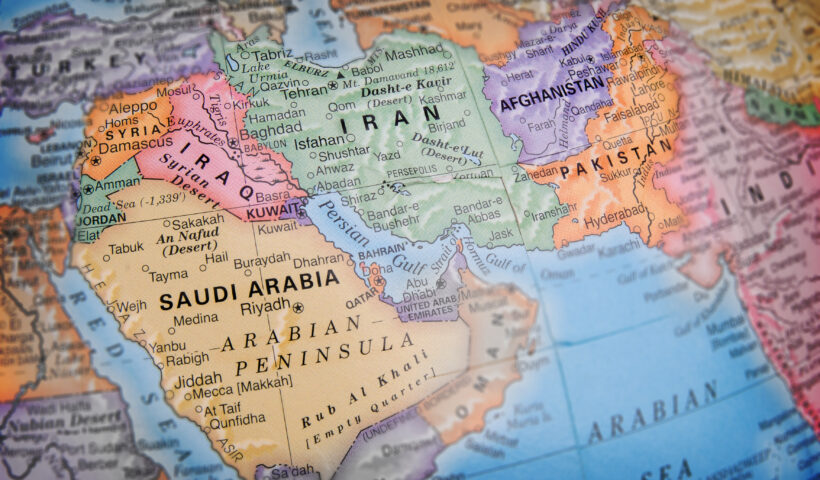
President Donald Trump claims to have ended between six and eight wars during his second presidency—but the number keeps changing. An investigation reveals these “wars” include temporary ceasefires that have since collapsed, diplomatic disputes that never involved combat, and conflicts where Trump’s role was marginal. Meanwhile, his actual military record tells a different story: the assassination of Iranian General Qasem Soleimani that nearly triggered war with Iran, the largest U.S. Caribbean naval deployment since the Cuban Missile Crisis with lethal strikes killing dozens, and unprecedented use of National Guard troops against American protesters. Peace researchers and fact-checkers rate Trump’s claims as “mostly false” or “significant exaggerations.” Several celebrated peace deals have already fallen apart, with renewed fighting killing civilians just weeks after signing ceremonies. This investigation examines the gap between Trump’s peaceful rhetoric and his administration’s military actions.
View More Trump Claims to Have Ended Eight Wars, The Reality Reveals a Pattern of Coercion, Credit, and CollapseCategory: Hypocrisy
Trump’s Tariff Revenue Has Been Pledged Multiple Times Over on Money Not Yet Collected
President Donald Trump has promised to use tariff revenue to fund at least five major initiatives: a $12 billion farmer bailout, $2,000 direct payments to Americans, expanded child care assistance, $3 trillion in tax cut offsets, and paying down the $37 trillion national debt. The problem is mathematical impossibility. Even the most optimistic projections show tariffs will generate $2.3 trillion over ten years—far short of the $10+ trillion in cumulative promises. This investigation reveals how the same revenue stream has been pledged multiple times over, while Trump’s repeated claims that “foreign nations” pay tariffs contradicts economic evidence showing American consumers and businesses bear the costs through higher prices. Budget experts describe it as an “over-allocation problem” where every dollar has been promised three or four times, making it arithmetically impossible for any of the commitments to be fully kept.
View More Trump’s Tariff Revenue Has Been Pledged Multiple Times Over on Money Not Yet CollectedWhen Your Meal Allowance Makes You Too Rich for Food Stamps: An Open Letter to Congress
Members of Congress receive $79 per day for meals—an annual total of $28,835 that exceeds the income threshold for a single person to qualify for SNAP benefits. Meanwhile, 41.7 million Americans receive an average of just $6.24 per day in food assistance. This investigation reveals a system where lawmakers earning $174,000 annually claim meal stipends 12.7 times larger than what they provide to hungry families, while at least 17 millionaire representatives utilize these taxpayer-funded allowances without means testing or work requirements. The data exposes an indefensible moral architecture: Congress has determined it needs $79 daily to eat while deciding Americans in poverty can survive on $6.24. When your lunch money would disqualify you from food stamps, the cruelty isn’t a flaw in the system—it is the system.
View More When Your Meal Allowance Makes You Too Rich for Food Stamps: An Open Letter to CongressWhat Trump’s Removal of Senior Military and Intelligence Leaders Could Mean for U.S. National Security
The Trump administration’s approach to the Afghanistan withdrawal created structural conditions that shaped—and in some ways constrained—the decisions made by the administration that followed. By negotiating directly with the Taliban while excluding the Afghan government, sharply reducing U.S. troop levels before the final evacuation, and issuing a firm withdrawal deadline with few enforcement mechanisms, the U.S. signaled a sweeping shift in leverage that reverberated throughout the country’s political and military institutions. When the Biden administration assumed office, it inherited an agreement that had already weakened the Afghan state and empowered its adversaries, narrowing its available policy options. While the chaos of the final withdrawal raised urgent questions about operational preparedness and accountability, the precursor decisions cast a long shadow. The episode illustrates how foreign policy handoffs—especially those involving active conflict—carry consequences that can transcend administrations, redefine regional dynamics, and reshape U.S. credibility abroad.
View More What Trump’s Removal of Senior Military and Intelligence Leaders Could Mean for U.S. National Security