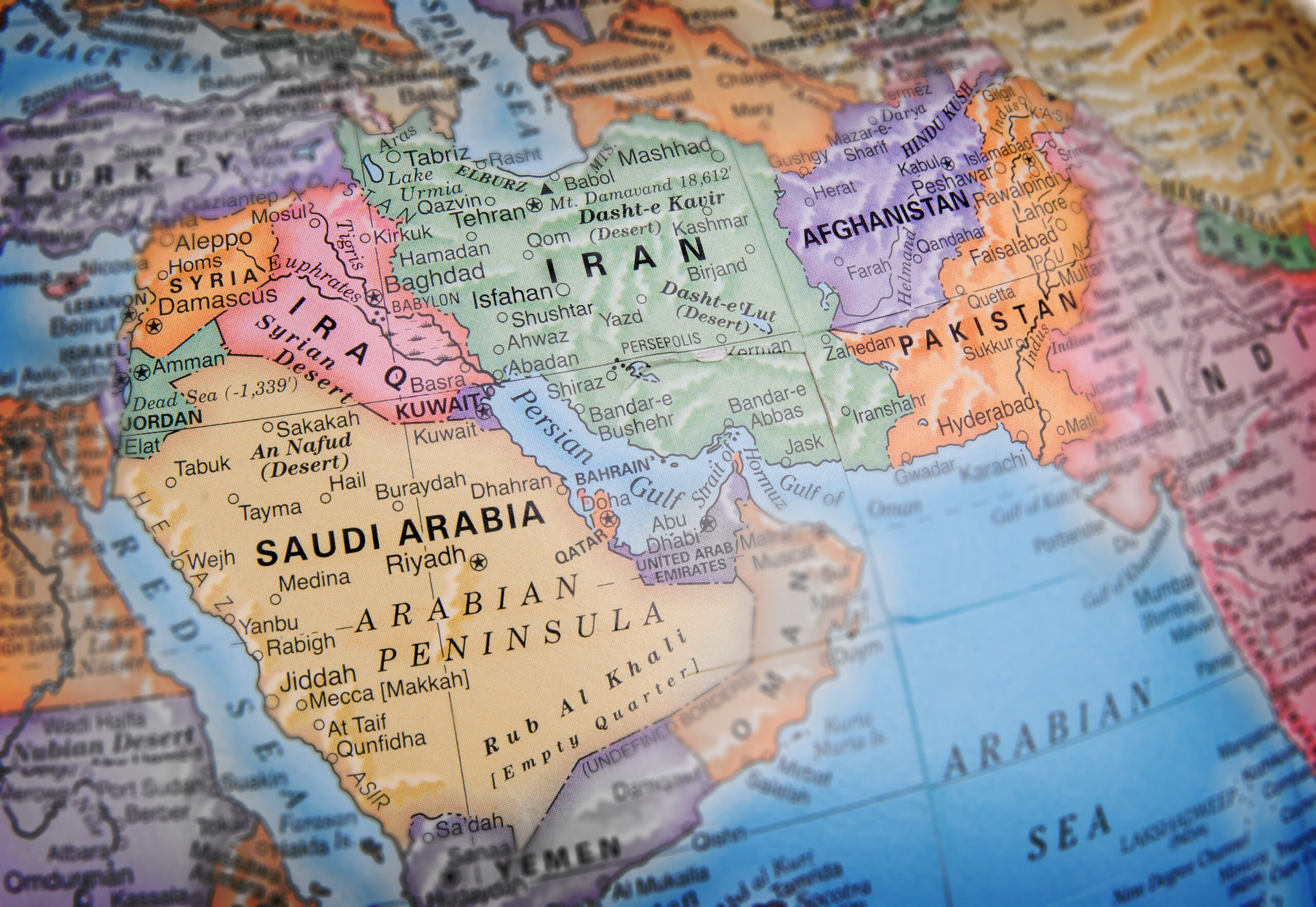
How the self-styled peace candidate became a wartime president across seven countries—securing Venezuela’s oil, igniting Operation Epic Fury against Iran, and calling all of it something else entirely.
The Promise That Defined Him
There is a particular kind of political promise—the kind so central to a candidate’s identity that it doesn’t function as a policy position so much as a personality claim. Donald Trump made that kind of promise about war. Not once, not in a single speech, but for more than a decade across social media, rally stages, television interviews, and the floor of Madison Square Garden. He was, he insisted, the man who stops wars. Not the man who manages them, or monitors them, or explains them. The man who stops them.
“We had no wars. They said, he will start a war. I’m not going to start a war. I’m going to stop wars.” — Donald Trump, NPR
That statement was not a gaffe or a boast thrown off in a moment of rally-stage adrenaline. It was the crystallization of a political brand—one built across more than ten years of rhetoric, packaging, and merchandise. It worked with libertarian-leaning Republicans skeptical of foreign entanglements. It worked with young male voters frightened by the specter of a draft. It worked with parents who remembered Iraq and Afghanistan and didn’t want their children sacrificed to a foreign adventure they couldn’t pronounce on a map.
The anti-war candidate won. And then—within thirteen months of his second inauguration—the United States was conducting military operations across Venezuela, Yemen, Nigeria, Syria, Somalia, and Iran. American service members were dying. Operation Epic Fury, a coordinated U.S.-Israeli military campaign, had effectively shut down the Strait of Hormuz, through which roughly one-fifth of the world’s oil passes. A global energy shock was underway.
The administration’s official position was that none of this was a war.
That gap—between what was done and what officials say was done—is the subject of this report. It is a gap with profound legal, constitutional, and political consequences. It raises a question that history has encountered before: when a government has every incentive to avoid the word war, how long can the word hold?
A Decade of Anti-War Branding
The record of Trump’s anti-war commitments is not ambiguous. It is, in fact, unusually well-documented—a decade-long trail of statements, endorsements, and campaign artifacts that collectively constitute one of the most coherent foreign policy brands in modern American political history.
2011 — The Original Critique
It began not as a campaign promise but as a prediction. In a 2011 video, Trump warned that President Obama would ‘start a war with Iran because he has absolutely no ability to negotiate.’ The implication was clear: a stronger, more competent leader would resolve tensions through deal-making rather than force. Trump was positioning himself, years before any presidential run, as the dealmaker alternative to feckless establishment governance. [NPR-2]
2016 — ‘Stupid Wars’ as Campaign Centerpiece
When Trump won the White House in 2016, opposition to what he called the ‘long and draining wars’ of his predecessors was a defining element of his platform. He called the Iraq War ‘a big, fat mistake’ on a Republican primary debate stage—a remarkable departure from party orthodoxy that resonated with a base exhausted by two decades of post-9/11 expenditure. Veterans, rural communities that had borne a disproportionate share of combat burden, and fiscal conservatives heard something the establishment had never offered: an acknowledgment that the sacrifice might not have been worth it. [NBC-1]
2020 — The Governing Principle
‘We’ve spent $8 trillion in the Middle East, and we’re not fixing our roads in this country? How stupid,’ Trump told White House reporters—framing endless war not just as strategic failure but as a domestic theft. [NPR-3]
2023 — The Vance Doctrine
When JD Vance endorsed Trump’s 2024 candidacy in the Wall Street Journal, he organized the piece around a single headline: ‘Trump’s Best Foreign Policy? Not Starting Any Wars.’ The anti-war identity was, by 2023, the organizing principle of the MAGA foreign policy vision. [Axios-1]
2024 — The Promise Becomes Merchandise
Tulsi Gabbard—who would become Trump’s Director of National Intelligence—declared: ‘A vote for Donald Trump is a vote to end wars, not start them.’ She had previously sold ‘No War with Iran’ shirts in 2020. The promise was a product, actively sold to the American public by the incoming administration’s own national intelligence chief. [Axios-2]
At Madison Square Garden weeks before Election Day, Trump delivered his final pre-election pledge on the subject: ‘I will tell you, you’re not going to have a war with me and you’re not going to have a third world war with me.’ His campaign simultaneously amplified fears that a Harris win would lead young men to be drafted—a direct appeal to draft-age voters who saw Trump as the safe choice. He won that demographic by substantial margins. [Snopes] [NBC-2]
The Escalation Toward Conflict — Venezuela
Military interventions rarely arrive without warning. The January 2026 operation in Venezuela was preceded by a sustained campaign of economic and logistical pressure that followed a familiar historical playbook—one that scholars of U.S. foreign policy have documented across decades of interventions in Latin America.
The groundwork, it would later emerge, was laid well before the operation launched. The CIA sent a team into Venezuela months in advance to track Maduro’s movements. Delta Force erected a mockup of his safe house for rehearsal. U.S. Southern Command began striking vessels in the Caribbean as early as September 2025. In November, opposition leader María Corina Machado attended a Miami business meeting—with Trump present—and promised to open Venezuela’s oil reserves to American companies. [Wiki-1]
In November and December 2025, the administration held secret talks with Maduro’s government about oil reserves, then escalated to seizing sanctioned tankers as part of a broader blockade. Intensified sanctions had long targeted the Venezuelan oil sector, effectively barring most U.S. entities from transactions involving Venezuelan crude—a sector that at its peak produced more than 3 million barrels per day and now struggled to sustain a fraction of that output. [Reuters] [Wiki-2]
Historians of U.S. intervention in Latin America noted the resemblance to prior episodes. Economic strangulation followed by military action was not a new formula. It had been employed, with variations, in Chile in the early 1970s, in Nicaragua across the 1980s, and in Iraq between the Gulf War and the 2003 invasion. The logic was consistent: weaken the target economically, isolate it diplomatically, then present military action as a response to instability rather than its cause.
The sequence was not improvised. It was, by any reasonable construction, a planned regime change operation—with oil access as a stated objective.
The January Operation — Capture of a President
On January 3, 2026, United States military forces conducted a large-scale operation inside Venezuela, culminating in the capture of President Nicolás Maduro in Caracas and his subsequent transport to the United States. The operation involved coordinated air and ground assets. Dozens of people were reported killed during the assault. Maduro, who had governed Venezuela since 2013, was taken into U.S. custody and transferred to American soil to face charges under longstanding indictments related to narcotics trafficking. [AP] [Wiki-2]
The scale of the military deployment—by any ordinary definition—constituted an act of war against a sovereign nation. The United States had not declared war on Venezuela. It had not sought, and did not receive, formal congressional authorization for the use of military force. It did not invoke the War Powers Resolution in advance. The administration instead described the operation as a ‘targeted action’ within existing legal authorities—a characterization that legal scholars immediately contested. [JustSecurity]
The capture of a sitting head of state by a foreign military force is, under established principles of international law and the United Nations Charter, an act of profound seriousness. Article 2(4) of the U.N. Charter prohibits the threat or use of force against the territorial integrity or political independence of any state. The administration did not address this provision publicly. [UN Charter, Art. 2(4)]
LEGAL CONTEXT: THE WAR POWERS RESOLUTION OF 1973
The War Powers Resolution (50 U.S.C. §§ 1541–1548) requires the President to notify Congress within 48 hours of committing U.S. forces to armed conflict. It further limits military engagement without congressional authorization to 60 days.
Legal scholars have long debated the Resolution’s enforceability, but its reporting requirements apply at minimum. The administration’s characterization of the Venezuela operation as something other than ‘hostilities’—and of the Iran strikes as ‘collective self-defense’—has direct relevance to compliance obligations under the Resolution.
The United States has not formally declared war since 1942. It has fought major conflicts on every continent since then. [War Powers Resolution] [Fisher, Presidential War Power]
Operation Epic Fury — The Iran Campaign
The Venezuela operation was not an isolated episode. It was, analysts now argue, the first half of a two-part strategic play—the hemispheric move that preceded a far more consequential one in the Middle East.
In late February 2026, the United States and Israel jointly launched Operation Epic Fury: a coordinated military campaign targeting Iran’s nuclear program, its military leadership, and the strategic infrastructure that underpins its regional influence. The operation effectively shut down the Strait of Hormuz—the narrow waterway through which roughly 20 percent of the world’s oil transits—triggering the most severe global energy shock in decades.
Israel’s defense minister later confirmed that the campaign had originally been planned for the summer of 2026, but was pushed forward after fast-moving events inside Iran and shifting political conditions created a window that both governments decided to exploit. [Newsweek]
The temporal connection between Venezuela and Iran is not circumstantial. Secretary of Interior Doug Burgum’s visit to Venezuela came weeks after the administration completed its first sale of Venezuelan oil—a transaction valued at approximately $500 million—and he was the first Cabinet member to travel internationally after Operation Epic Fury launched. The sequencing matters. [TownHall]
If Venezuela’s oil was secured in January and Operation Epic Fury launched in late February—locking down the Strait of Hormuz and disrupting 20% of global supply—was Western Hemisphere oil secured in anticipation of needing an alternative cushion?
Some analysts have offered a strategic reading that connects the hemispheric and Middle Eastern operations into a single coherent logic. As reported by PJ Media, Trump’s vision—as understood by those close to the administration—involves first securing the Western Hemisphere from Chinese influence (Panama Canal, Venezuela, Cuba), then using a disrupted Persian Gulf as economic leverage against Beijing. Iran is the Middle Eastern linchpin: its removal from the equation, and the disruption of the Strait of Hormuz, creates the kind of global energy shock that gives Washington enormous coercive power over energy-dependent rivals. [PJMedia]
The question does not have a definitive public answer. What it has is a timeline, a sequence of stated objectives, and a pattern of decisions that collectively raise it with considerable force.
‘This Is Not a War’ — The Semantic Strategy
The word ‘war’ has constitutional implications in the United States. Article I vests the power to declare war in Congress. Modern presidents have spent decades navigating around this constraint through authorizations for the use of military force, through the War Powers Resolution of 1973, and through careful legal vocabulary. The Trump administration’s approach pushed this pattern to a new degree of strain.
“It is obviously ‘war’ when two countries attack a third, kill its leader, and try to destroy its military. But in the way modern American leaders dance around the U.S. Constitution, names get complicated.” — CNN
Trump apprised Congress of military action against Iran with a two-page document required by the 1973 War Powers Resolution—announcing ‘military action’ in the interest of ‘collective self-defense.’ The legal framing was notable: this was a preemptive U.S.-Israeli strike, not a response to an attack on an ally. The administration had inverted the concept of collective self-defense to justify offensive action. [CNN-2]
Congress pushed back—but not enough. The House rejected a war powers resolution 219 to 212, with Trump’s fellow Republicans providing the decisive margin to preserve his unilateral authority. Seven votes. The constitutional constraint that was supposed to prevent presidents from conducting wars without congressional approval was defeated by seven votes, along party lines. [AlJazeera]
The shifting justifications for the Iran action were extraordinary even by Washington standards. At least four different accounts of why Iran posed an ‘imminent threat’ were offered in fewer than ten days—including two final versions that directly contradicted one another. The legal threshold for a preemptive strike requires an imminent threat. When the administration cannot maintain a consistent description of what that threat was, the legal foundation of the action collapses. [CNN-2]
Conservative commentator Matt Walsh captured the logical fracture with unusual clarity: ‘So far we’ve heard that although we killed the whole Iranian regime, this was not a regime change war. And although we obliterated their nuclear program, we had to do this because of their nuclear program.’ [NPR-4]
The Venezuela framing had the same architecture. Officials insisted it was not an occupation, not regime change, not nation-building. Yet President Trump stated in public remarks that the United States would ‘run’ Venezuela during the transitional period—and Vice President Vance elaborated that the U.S. could ‘control’ Venezuela’s ‘purse strings’ by dictating where its oil could be sold, a description of economic subordination that had not been articulated this baldly by an American official in decades. [PBS] [CNN-3]
The administration’s determined avoidance of the word war is not incidental. It is a strategic choice with specific legal, political, and constitutional motivations. The most immediate legal concern is the War Powers Resolution: if either operation constitutes hostilities, the clock is running. The political motivation is equally transparent—the president ran explicitly on a promise of no new wars, and describing these operations as wars creates an immediate and obvious contradiction. The pattern has a consistent logic across American history: administrations avoid formal declarations of war because formal declarations impose accountability.
As constitutional scholar Louis Fisher and others have documented, the erosion of the formal war declaration requirement is one of the most significant constitutional developments of the post-World War II era. The Korean War was officially a ‘police action.’ Vietnam escalated under the Gulf of Tonkin Resolution. A ‘targeted action’ or a ‘stabilization mission’ exists in a more ambiguous space—and ambiguity, for executive power, is almost always preferable. [Fisher, Presidential War Power]
Venezuela’s Oil and the Strategic Question
Any full accounting of the Venezuela operation must confront the resource dimension. Venezuela possesses the largest proven crude oil reserves in the world—estimated at more than 300 billion barrels. These reserves dwarf those of Saudi Arabia, Iran, and every other OPEC member. [OPEC] [EIA]
Trump did not obscure the economic dimension. He stated it directly. ‘The oil companies are going to go in and rebuild their system. It was the greatest theft in the history of America,’ he told reporters—framing Venezuelan oil not as Venezuelan but as something owed to the United States. [CNN-3] Administration officials acknowledged that U.S. companies were being encouraged to invest up to $100 billion in rebuilding Venezuelan oil infrastructure and that American firms would receive privileged access to the country’s energy sector as part of whatever transitional arrangement emerged.
Three interpretive frameworks compete for explanatory priority. The first is energy security: Venezuelan reserves represent a massive underutilized asset in the Western Hemisphere. The second is economic opportunity: the rebuild represents one of the largest investment opportunities in the Americas in decades. The third is strategic positioning: controlling Venezuelan oil supply provides leverage in any future confrontation with China or Russia, both of which have their own energy dependencies. The most accurate account may be that all three are true simultaneously—which would mean that the strategic calculation behind the operation was more comprehensive, and more carefully planned, than the ‘targeted action’ framing implies. [Columbia CGEP] [RAND]
The Oil Company Fracture
The administration’s implicit promise to American energy interests was straightforward: we will remove adversarial governments, open new production basins, and secure global supply lines so that American oil companies can operate with the full backing of the United States government. The reality of early 2026 has been considerably more complicated.
Venezuela: The CEOs Who Weren’t Consulted
ExxonMobil, ConocoPhillips, and Chevron reportedly had no prior knowledge of the Venezuela operation. When Trump subsequently announced a $100 billion investment commitment in Venezuela’s oil sector, ExxonMobil’s CEO told a room of executives that Venezuela was ‘uninvestable’—and the majority present made no firm commitments. The companies the operation was ostensibly fought to benefit had not been consulted and, when the results were presented to them, declined the invitation. [Wiki-3]
Iran: Operation Epic Fury’s Unintended Casualties
The Iran strikes created a different and more acute problem. ExxonMobil, TotalEnergies, and Shell emerged as the three companies most exposed to disruptions, with the Middle East accounting for 20 to 29 percent of their total production. All three are partners of QatarEnergy—which halted LNG production following Iranian drone strikes on its facilities. Nearly 60 percent of ExxonMobil’s LNG business is concentrated in the Middle East. The war that was supposed to secure global energy supply had disrupted the operations of the largest private energy producers in the world. [BOE] [BIC]
The Structural Shift
What is emerging in the energy sector is something analysts are calling a ‘structural shift’ in how risk is priced. Investors are now penalizing companies with large exposure to volatile U.S. military corridors and rewarding those that have minimized it. Operation Epic Fury has served as the catalyst for what analysts term the ‘localization of energy’: a decoupling from the globally integrated supply chains that American multinationals spent decades building. Company boards are being told to price in ‘American policy risk’ as its own formal category of exposure. The category did not exist, as a classification, before Operation Epic Fury. [FinContent]
The irony is structural: the war that was supposed to benefit U.S. energy interests is accelerating a decoupling by the very multinationals the administration claimed to be fighting for.
Global Reactions and Strategic Fallout
The international response has been swift and largely negative. Russia and China—both of which had substantial economic and strategic investments in Venezuela—issued strong condemnations. Both had extended significant credit lines and infrastructure investments to the Maduro government over the preceding decade. Both lodged diplomatic protests through the United Nations Security Council, where they hold veto power and where the United States faced sharp questioning about the legal basis for its actions. [BBC]
Latin American neighbors presented a more complicated picture. Several governments that had been critical of Maduro for years nonetheless objected to the precedent: that a powerful external actor could unilaterally remove a sovereign government and install a replacement more favorable to its interests. The distinction between disliking a government and endorsing another country’s military overthrow of it has deep roots in Latin American political culture and international law.
Shipping and insurance markets in the Caribbean and Persian Gulf have been materially disrupted. Risk premiums attached to maritime cargo in both regions rose sharply following the operations. How Beijing and Moscow respond—through diplomatic channels, economic countermeasures, or other means—remains one of the most significant open questions. Early indications suggest both capitals are actively exploring options. [ForeignPolicy]
The MAGA Fracture — When the Base Breaks
The political consequences of the Iran strikes are unfolding in real time, and they are cutting in directions the administration did not fully anticipate. Early polling showed limited public support for the strikes, including from Republicans who typically afford Trump considerable latitude. The online communities that formed the backbone of the MAGA coalition—the forums, the influencers, the podcasters—have been notably fractured in their response to a conflict that does not fit the anti-war brand they were sold. [TPR-1]
The death of American service members in the early hours of the Iran campaign put Trump’s anti-war argument to what Axios called its ‘most brutal test.’ Trump himself had spent years railing against the foreign policy establishment that dragged America into endless Middle East wars—calling it, by some accounts, his most sincere political conviction, and the one his base believed most deeply. The sincerity, or its perception, is now the wound. [Axios-3]
Late on the first night of the Iran strikes, Trump wrote on Truth Social that the United States has a ‘virtually unlimited’ supply of certain weapons and that ‘wars can be fought forever’—drawing fresh criticism from Republicans who had voted for him precisely because they believed the opposite. The statement was, in context, a declaration of military confidence. It landed, for a significant portion of his base, as a betrayal. [TPR-2]
Meanwhile, the administration maintained its peace-branding in parallel. It stood up a Board of Peace ostensibly overseeing a Gaza ceasefire. Trump was awarded a newly created FIFA Peace Prize for efforts to ‘promote peace and unity.’ The optics of peacemaking were maintained even as the operational reality of sustained military action compounded across continents. [TPR-3]
The Template Question — What Comes Next
Among the analysts and former officials who have spoken publicly about these operations, a recurring concern extends beyond the immediate situation: that Venezuela and Iran may represent a template rather than exceptions.
If the United States can conduct a military operation against a sovereign government, seize its leader, impose control over its resources, then launch a coordinated second operation against another nation’s military and leadership infrastructure—and avoid the political and legal consequences of formal war declarations by maintaining semantic discipline about what these operations are called—then the precedent exists for similar actions elsewhere.
The RAND Corporation and other strategic research organizations have modeled these scenarios for years: if a major conflict with China were to develop over Taiwan, control over Western Hemisphere oil supply would provide strategic insulation from the disruptions to global energy markets that such a conflict would produce. Whether that analysis drove the sequencing of Venezuela before Iran is an open question. The timeline suggests it might. [RAND] [Globe]
Others are more cautious about the ‘test case’ interpretation, noting that Venezuela’s specific characteristics—its oil reserves, its diplomatic isolation, its proximity to the United States, the existing legal instruments targeting its government—made it a uniquely accessible target. But the precedent established by successfully framing both operations as something other than war is not similarly limited. It is, by definition, universal.
The Cost of the Rebranding
The contradiction at the center of all of this is not subtle. A president who made anti-interventionism the cornerstone of his political identity has ordered military operations across seven countries. American forces killed people in Caracas. An elected president was seized and transported to American soil. Operation Epic Fury has effectively blockaded global oil transport. Three of the world’s largest energy companies are quietly restructuring their relationship with American foreign policy risk. American service members are dead.
Yet the administration insists, with remarkable consistency, that none of this is war.
There are two ways to think about this insistence. The first is cynical: the label is a legal and political shield, deployed to avoid accountability under the War Powers Resolution, to preserve the campaign narrative, and to preempt the international law arguments that would follow from a more accurate description. The second reading is more troubling: that the administration genuinely believes the distinction between what it is doing and ‘war’ is meaningful—that operational control of a country’s governance and resources, if maintained without formal annexation, constitutes something categorically different. If this is the sincere view, it represents an interpretation of sovereignty, international law, and constitutional war powers that most scholars would find difficult to defend.
As one political scientist noted in The Globe and Mail: ‘Presidents often find their promises conflict with something else they also care about. They also dramatically underestimate how difficult it is to fulfill their promises and how circumstances force them to do things they pledged not to do.’ The observation is fair, as far as it goes. What is different here is not that promises were broken. It is that the promises were the product—the organizing principle, the campaign brand, the merchandise, the rally chant, the closing argument to draft-age voters and their parents.
The accumulation of euphemisms—police action, stabilization mission, collective self-defense, targeted action—has eroded the constitutional framework that was supposed to govern the use of force. That framework vested the power to declare war in Congress, not the executive. Whether Congress, the courts, or the public will demand accountability for what these operations actually are remains the central, unanswered question.
History may ultimately decide whether the distinction between what was done in Venezuela and Iran and ‘war’ is meaningful—or merely semantic. The answer will matter for the next operation, and the one after that.
What is certain is that the stakes extend far beyond Venezuela or Iran. If the ‘not a war’ framing holds—if neither Congress nor the courts nor the public demand accountability for what the operations actually were—then the precedent is established, road-tested, and validated. The next operation will begin with the same framing already in place.
The question of whether America is at war—in Venezuela, in Iran, or across the seven countries where its forces have operated in the first thirteen months of this administration—is not merely a question of vocabulary. It is a question about who gets to decide when the country’s military is used, under what conditions, and with what accountability to the people in whose name it acts.
That question, at this moment, remains unanswered.
SOURCES & CITATIONS
U.S. Government & Legal Sources
[1] War Powers Resolution, 50 U.S.C. §§ 1541–1548 (1973). https://www.congress.gov
[2] U.S. Energy Information Administration — Venezuela Country Analysis. https://www.eia.gov
[3] U.S. Department of the Treasury — Venezuela Sanctions Program. https://home.treasury.gov
[4] United Nations Charter, Article 2(4) — Prohibition on Use of Force. https://www.un.org/en/about-us/un-charter
Academic & Policy Research
[5] Fisher, Louis. Presidential War Power (3rd ed.). University Press of Kansas, 2013.
[6] Goldsmith, Jack. Power and Constraint: The Accountable Presidency After 9/11. W. W. Norton, 2012.
[7] Brookings Institution. ‘Trump and the Middle East: A Legacy of Contradictions.’ 2021. https://www.brookings.edu
[8] Columbia Center on Global Energy Policy — Venezuelan Oil Sector Analysis. https://energypolicy.columbia.edu
[9] RAND Corporation — Western Hemisphere Energy Security Scenarios. https://www.rand.org
[10] Council on Foreign Relations — U.S. Military Presence and Operations Around the World. https://www.cfr.org
News & Wire Services
[NPR-1] NPR — Trump Quote: ‘We had no wars…’ https://www.npr.org
[NPR-2] NPR — Trump 2011 Iran Warning Video. https://www.npr.org
[NPR-3] NPR — Trump: ‘We’ve spent $8 trillion in the Middle East.’ https://www.npr.org
[NPR-4] NPR — Matt Walsh quote on Iran contradictions. https://www.npr.org
[NPR-5] NPR — Seven countries and counting. https://www.npr.org
[NBC-1] NBC News — Trump 2016 ‘stupid wars’ campaign coverage. https://www.nbcnews.com
[NBC-2] NBC News — Draft fears and young male voter appeal. https://www.nbcnews.com
[Axios-1] Axios — Vance WSJ endorsement, ‘Not Starting Any Wars.’ https://www.axios.com
[Axios-2] Axios — Tulsi Gabbard ‘No War with Iran’ shirts. https://www.axios.com
[Axios-3] Axios — Iran strikes as ‘most brutal test’ of anti-war argument. https://www.axios.com
[Snopes] Snopes — Trump MSG rally pledge, October 2024. https://www.snopes.com
[Globe] The Globe and Mail — Force projection / presidential historian quote. https://www.theglobeandmail.com
[CNN-1] CNN — ‘Obviously war’ constitutional analysis. https://www.cnn.com
[CNN-2] CNN — Two-page War Powers notification and shifting justifications. https://www.cnn.com
[CNN-3] CNN — Trump: Venezuela oil the ‘greatest theft in history.’ https://www.cnn.com
[AlJazeera] Al Jazeera — House rejects war powers resolution 219–212. https://www.aljazeera.com
[AP] Associated Press — Venezuela Coverage Archive. https://apnews.com
[Reuters] Reuters — Americas Section and Venezuela sanctions coverage. https://www.reuters.com
[BBC] BBC News — Latin America Section. https://www.bbc.com/news/world/latin_america
[ForeignPolicy] Foreign Policy — Venezuela and Latin America Coverage. https://foreignpolicy.com
[PBS] PBS NewsHour — Vance: ‘We control the energy resources.’ https://www.pbs.org/newshour
[Newsweek] Newsweek — Israel defense minister: Iran timeline moved from summer 2026. https://www.newsweek.com
Energy & Industry Analysis
[OPEC] OPEC Secretariat — Venezuela Proven Reserves Data. https://www.opec.org
[BOE] BOE Report — ExxonMobil, TotalEnergies, Shell most exposed; QatarEnergy LNG halt. https://www.boereport.com
[BIC] BIC Magazine — 60% of ExxonMobil LNG in Middle East. https://www.bicmagazine.com
[FinContent] FinancialContent — ‘Structural shift’ / geopolitical distance / localization of energy. https://www.financialcontent.com
[WoodMac] Wood Mackenzie — Latin America Upstream Energy Analysis. https://www.woodmac.com
[Rystad] Rystad Energy — Venezuela Production Outlook. https://www.rystadenergy.com
Legal Commentary & Constitutional Analysis
[JustSecurity] Just Security — War Powers Resolution Commentary and Analysis. https://www.justsecurity.org
[HLS] Harvard Law School — Constitutional War Powers Analysis. https://hls.harvard.edu
Additional Sources
[TPR-1] Texas Public Radio — MAGA fracture and polling on Iran. https://www.tpr.org
[TPR-2] Texas Public Radio — ‘Wars can be fought forever’ Truth Social post. https://www.tpr.org
[TPR-3] Texas Public Radio — FIFA Peace Prize / Board of Peace. https://www.tpr.org
[Wiki-1] Wikipedia — CIA/Delta Force Venezuela pre-operation tracking; Machado oil pledge.
[Wiki-2] Wikipedia — Secret Maduro oil talks, tanker seizures, January 2026 operation.
[Wiki-3] Wikipedia — Oil majors not consulted; ExxonMobil CEO ‘uninvestable.’
[TownHall] TownHall — Burgum Venezuela visit; first $500M oil sale; first post-Epic Fury Cabinet travel. https://townhall.com
[PJMedia] PJ Media — Strategic read: Panama Canal, Venezuela, Cuba; China leverage analysis. https://pjmedia.com