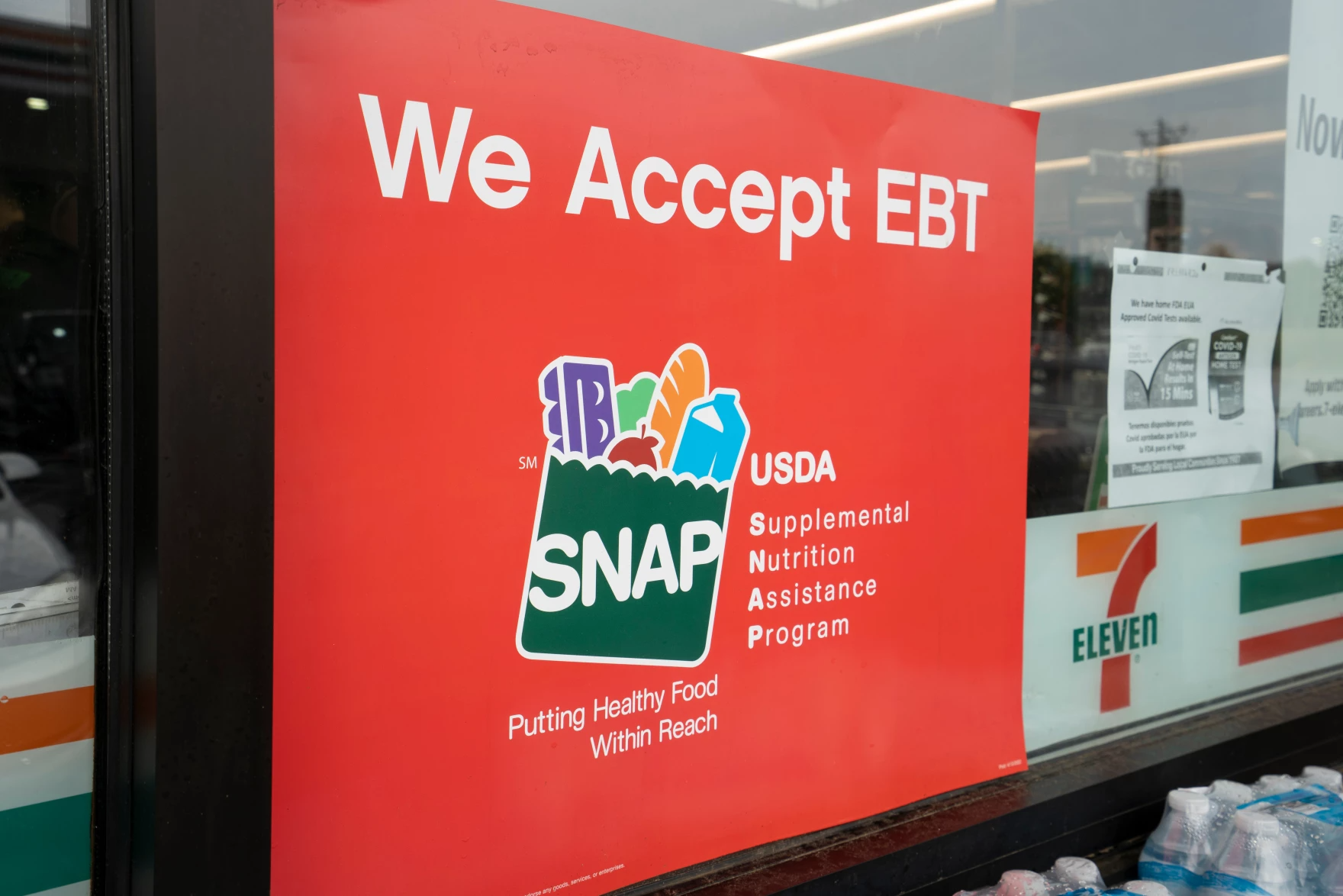
Members of Congress receive $79 daily for meals—a yearly total of $28,835 that exceeds the income threshold for SNAP eligibility. Meanwhile, they provide just $6.24 per day to 41.7 million Americans struggling with food insecurity. This analysis exposes the mathematical obscenity of a system where lawmakers’ lunch money would disqualify them from the food assistance programs they routinely threaten to cut.
The Numbers Don’t Lie, But You Do
The obscenity reveals itself in simple arithmetic. Members of the United States Congress receive a daily meal stipend of $79 when the House is in session.1 This breaks down to $18 for breakfast, $20 for lunch, $36 for dinner, and $5 for incidental expenses.2 Lawmakers need not provide receipts; they simply certify their “eligible expenses.”3
Meanwhile, the Supplemental Nutrition Assistance Program (SNAP) provides an average benefit of $187.20 per month to recipients—translating to $6.24 per day.4 In fiscal year 2024, SNAP served 41.7 million Americans, representing 12.3 percent of the U.S. population.5
The annual comparison proves even more striking. A Congressional meal stipend, if claimed daily throughout the year, totals $28,835. The gross income eligibility threshold for SNAP benefits for a three-person household stands at $2,798 per month, or $33,576 annually.6 For a single-person household, the threshold drops to $19,584 per year.7
Read that again: A member of Congress’s meal allowance alone exceeds what a single American can earn and still qualify for food assistance. For a family of three, the meal stipend approaches 86 percent of their maximum allowable annual income.
The Golden Rule You Forgot
Congress has determined its members deserve certain standards. Beyond the $79 daily meal stipend, representatives and senators receive $258 per day for lodging when in session.8 Their base salary remains $174,000 annually, frozen since 2009, though leadership positions command more—$223,500 for the Speaker of the House and $193,400 for majority and minority leaders.9
These benefits come with no means testing, no work requirements beyond showing up for votes, no time limits, and no drug screening. At least 17 millionaire members of Congress have claimed meal and lodging allowances despite their substantial personal wealth.10
For SNAP recipients, Congress has mandated a different standard. Gross monthly income must generally fall at or below 130 percent of the poverty line.11 Many adults aged 18 through 64 without children face a three-month time limit on benefits every three years unless they work or participate in training programs at least 20 hours weekly.12 The program requires constant verification, recertification, and scrutiny.
The question becomes unavoidable: If lawmakers believe they require $79 per day for meals, why have they decided every American does not deserve the same standard?
Stop Talking About the Poor
The rhetoric around poverty assistance has calcified into familiar patterns—discussions of “welfare dependency,” “personal responsibility,” and “entitlement culture.” Yet the data reveals who actually receives government support without question or limitation.
Congressional per diem operates as true entitlement. Members claim these funds based solely on their position, with no income verification required. They face no penalties for having independent wealth. They encounter no bureaucratic obstacles, no caseworkers questioning their choices, no requirements to prove they deserve assistance.
Compare this to SNAP administration. The program includes income verification, asset tests in some states, work requirements, time limits, and regular recertification processes.13 Recipients must document their need repeatedly while their choices face constant political scrutiny.
The irony cuts deeper: The Congressional meal stipend alone, if received as income, would disqualify a single person from SNAP benefits. The very amount Congress determined necessary for one person’s meals exceeds the program’s definition of poverty-level income.
The Violence of Your Hypocrisy
SNAP served an average of 41.7 million people monthly in fiscal year 2024.14 These recipients include children (approximately 39 percent of participants), adults aged 60 and older (19 percent), and working-age adults (42 percent).15 Many work in low-wage jobs that fail to cover basic expenses. Many are disabled. Many are elderly with fixed incomes insufficient for both food and medication.
Total federal SNAP spending reached $99.8 billion in fiscal year 2024.16 This translates to $2,394 per recipient annually, or $187.20 monthly per person. Congressional salaries for 535 members total approximately $93 million annually.17 If every member claimed the maximum meal per diem for an estimated 140 session days, the total would approach $5.9 million.
The per-person comparison proves instructive. SNAP spends $2,394 per recipient yearly. Congress receives $174,000 in salary plus potential meal stipends of $11,060 (for 140 days) and lodging stipends of $36,120 (for 140 days), totaling $221,180. This represents 92 times the annual SNAP benefit per recipient.
Yet Congress perennially debates whether SNAP provides too much support. Lawmakers question whether $6.24 daily creates “dependency.” They propose cuts, additional work requirements, and stricter time limits. Meanwhile, they accept without question their right to $79 daily for meals—12.7 times what they provide to hungry Americans.
What Treating People as Human Actually Means
Three policy options would align Congressional standards with those imposed on Americans in poverty.
Option One: Congressional members adopt SNAP-level benefits. Set the meal per diem to $6.24 daily. Require members to feed themselves on $187.20 monthly. Mandate they maintain this budget for 30 consecutive days while fulfilling their duties. Then reconvene the discussion about whether SNAP proves “too generous.”
Option Two: Extend Congressional standards to all Americans. Provide every American $79 daily for food—$2,370 monthly, $28,440 annually. Eliminate means testing. Remove work requirements. Abandon time limits. Grant the same dignity to all that Congress grants itself without hesitation.
Option Three: Acknowledge the moral architecture of current policy. Congress has created a system where lawmakers receive comfort, security, and abundance while providing subsistence, scrutiny, and shame to the poor. The meal stipend alone—just the allowance for food—exceeds poverty-level income thresholds. This structure is not accidental. It is designed.
The Policy Demand
Current SNAP policy fails to meet basic nutritional needs. The program provides $6.24 daily per person—less than $2.10 per meal. This amount has declined in real terms as inflation outpaces benefit adjustments.
Evidence-based policy would demand several reforms:
First, increase SNAP benefits substantially. At minimum, raise benefits to match the standard Congress has set for itself. If $79 daily represents the actual cost of adequate nutrition in Washington, D.C., extend that standard nationally, adjusted for local cost-of-living variations.
Second, eliminate punitive work requirements and time limits. Congress faces no such restrictions on its meal stipends. Work requirements have proven ineffective at increasing employment while successfully increasing hunger and hardship.18
Third, end means testing for basic nutrition assistance. The administrative costs of verifying poverty, tracking income changes, and processing recertifications consume resources better spent on food itself. Congress receives meal stipends based solely on attendance, not financial need. Apply the same principle universally.
Fourth, make benefits automatic and permanent. The Congressional meal stipend requires no application, no waiting period, no recertification. It continues automatically as long as members serve. Extend this efficiency to SNAP.
Fifth, fund these improvements adequately and permanently. The entire SNAP program costs $99.8 billion annually to serve 41.7 million people. This represents 0.37 percent of the $26.7 trillion U.S. economy. The nation can afford to feed its people at the same standard it feeds its representatives.
The Moral Bottom Line
Congress has decided its members require $79 daily for meals. Congress has simultaneously decided that Americans in poverty can survive on $6.24 daily. This disparity is not accidental. It reflects deliberate choices about whose needs matter and whose dignity deserves respect.
The mathematical reality bears repeating: The Congressional meal allowance, calculated annually at $28,835, exceeds the SNAP eligibility threshold for single-person households by $9,251. A person receiving only the Congressional meal per diem as income would be too wealthy to qualify for food stamps.
This is not policy. This is a statement of values. It declares that members of Congress deserve abundance while those they represent deserve poverty. It enshrines in law the principle that some people merit comfort while others merit suffering.
The cruelty is not a bug in the system. It is the system.
Shut Up or Step Up
Members of Congress face a binary choice.
Option one: Silence. Stop discussing welfare dependency, personal responsibility, and entitlement culture. Forfeit the right to judge how the poor spend $6.24 daily while claiming $79 for yourselves. Abandon the pretense that poverty results from individual moral failure rather than policy choices that systematically deprive people of resources while enriching the already comfortable.
Option two: Action. Treat every American with the dignity, generosity, and grace Congress grants itself. Feed people adequately. Provide housing security. Deliver healthcare. Remove bureaucratic obstacles. Eliminate punitive requirements. Extend to all citizens the benefit of the doubt automatically granted to those in power.
Because the current system stands as proof: The cruelty is indeed the point.
The data is unambiguous. Congress determined its members need $79 daily for meals—$28,835 annually. Congress simultaneously determined that a family of three earning more than $25,824 annually is too wealthy to deserve food assistance. These numbers cannot coexist with any claim to moral consistency.
Forty-one million Americans are watching. They notice that Congress votes itself meal allowances exceeding their total annual income. They observe lawmakers who dine on $79 daily while providing them $6.24. They understand perfectly well what this disparity communicates about their value as human beings.
The mathematics of inequality rarely presents itself so starkly. When your lunch money would disqualify you from food stamps, the system has failed. When legislators receive more for breakfast than they provide to families for an entire day, the cruelty becomes undeniable.
Congress can change these numbers. The question is whether it possesses the moral courage to do so.
Notes
About the Data: All figures for SNAP participation, benefits, and eligibility come from the U.S. Department of Agriculture’s Economic Research Service and Food and Nutrition Service for fiscal year 2024. Congressional salary and allowance information comes from the Congressional Research Service, the National Taxpayers Union Foundation, and General Services Administration per diem rate schedules. All calculations represent the author’s analysis of official government data.
Footnotes
- Dallas Express, “Members of Congress with Million-Dollar Net Worths Use Taxpayer Dollars to Pay for Lodging, Meals in Washington, D.C., According to Report,” November 4, 2023. ↩
- Smithsonian Institution, National Museum of Natural History, “FY 2024 Per Diem Rates for District of Columbia,” accessed November 30, 2025. ↩
- U.S. House of Representatives, Committee on House Administration, Members’ Congressional Handbook, cited in Dallas Express, November 4, 2023. ↩
- U.S. Department of Agriculture, Economic Research Service, “Supplemental Nutrition Assistance Program (SNAP) – Key Statistics and Research,” accessed November 30, 2025. ↩
- U.S. Department of Agriculture, Economic Research Service, “Percent of Population Receiving SNAP Benefits in Fiscal Year 2024,” accessed November 30, 2025. ↩
- U.S. Department of Agriculture, Food and Nutrition Service, “SNAP Income Eligibility Standards,” updated October 1, 2024. ↩
- Ibid. ↩
- Dallas Express, “Members of Congress with Million-Dollar Net Worths.” ↩
- National Taxpayers Union Foundation, “Congress Pay & Perks,” accessed November 2025. ↩
- Dallas Express, “Members of Congress with Million-Dollar Net Worths.” ↩
- Center on Budget and Policy Priorities, “A Quick Guide to SNAP Eligibility and Benefits,” October 3, 2025. ↩
- Ibid. ↩
- U.S. Department of Agriculture, Food and Nutrition Service, “SNAP Eligibility,” accessed November 30, 2025. ↩
- U.S. Department of Agriculture, Economic Research Service, “Key Statistics and Research.” ↩
- Ibid. ↩
- Ibid. ↩
- National Taxpayers Union Foundation, “Congress Pay & Perks.” ↩
- Center on Budget and Policy Priorities, “A Quick Guide to SNAP Eligibility and Benefits.” ↩