Power Without Restraint - Tantrums As Foreign Policy

Power Without Restraint – Tantrums As Foreign Policy

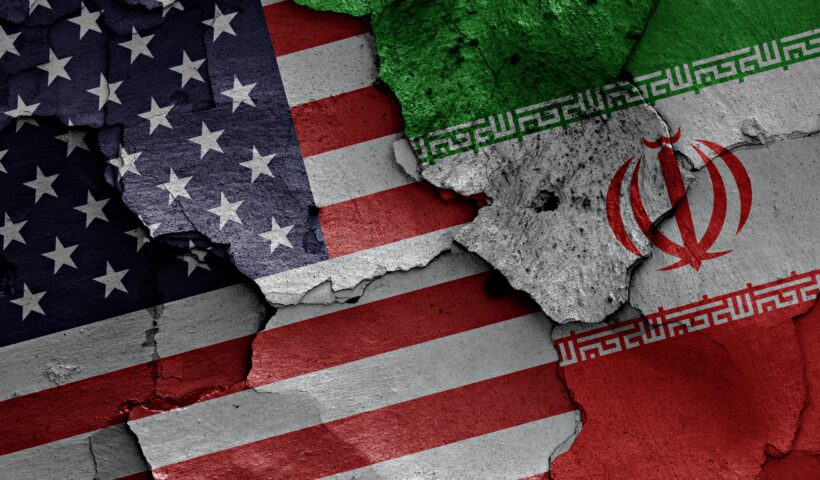
Operation Epic Fury — the February 28, 2026 U.S.–Israeli strike campaign authorized by Donald Trump and coordinated with the Israeli Defense Forces — targeted more than 1,000 sites across Iran, including facilities tied to its nuclear and missile programs and the compound of Supreme Leader Ali Khamenei, who was killed. Iran retaliated with regional missile and drone strikes, widening the conflict and disrupting global energy markets. The central critique is constitutional and strategic: the operation was launched without congressional authorization, prompting War Powers challenges from lawmakers including Tim Kaine and Rand Paul. Analysts at the Center for Strategic and International Studies and the Stimson Center questioned whether the mission shifted from counterproliferation to regime change without a defined end state. Internationally, António Guterres and the United Nations Security Council raised concerns about escalation and compliance with the UN Charter. The essay ultimately argues that durable authority depends not on displays of force, but on lawful process, proportionality, and democratic accountability.

View More Power Without Restraint – Tantrums As Foreign Policy
When the Government Chooses the Lie

When the Government Chooses the Lie

When a federal agency kills American citizens, constructs a false narrative contradicted by video evidence, and receives institutional protection from the government rather than accountability, it has not committed a policy error, it has inverted the foundational purpose of the American state. This article examines that betrayal through the lens of constitutional law, American history, and democratic theory, arguing that the Fifth and Fourteenth Amendments are not aspirational ideals but binding constraints on every federal agent and every enforcement action without exception. Drawing on documented patterns from Japanese American internment to COINTELPRO to post-9/11 surveillance overreach, it demonstrates that unchecked institutional power follows a consistent and predictable arc: misconduct expands to fit the protection provided. The piece confronts the false patriotism of reflexive agency loyalty, defines “un-American” with constitutional precision rather than political convenience, and lays out the specific remedies; independent investigation, congressional oversight, whistleblower protection, and criminal referral that the rule of law demands. At its core, the argument is simple: if a private citizen did what these agents did on camera, they would be arrested. Equal justice under law is either a binding commitment or it is nothing at all.

View More When the Government Chooses the Lie
Is the President Working for You?

Is the President Working for You?

Who, exactly, is this government working for? This is not a political attack. It is an audit of a $400 million jet accepted from a foreign monarchy, a presidential cryptocurrency that vaporized $4.3 billion in retail savings, a tax bill that lifted the wealthy and stripped health coverage from up to 17 million Americans, and a promise of transparency on the Epstein files that the Justice Department quietly broke. The evidence is documented. The math is not complicated. And the answer, once you read it, is not ambiguous.

View More Is the President Working for You?
How Economic Policy Trapped Workers in Impossible Choices

How Economic Policy Trapped Workers in Impossible Choices

Americans face four interconnected economic contradictions that make upward mobility mathematically impossible: they must spend to fuel growth while saving for emergencies—but have no money for either. They were told to pursue professional credentials for security—but those white-collar jobs are now primary targets for AI automation, and credentials don’t protect women and people of color from systematic wage discrimination. They’re told the economy is growing—but that growth concentrates among the wealthiest 10% while wages stagnate and corporate profits double as a share of GDP. The result: only 25% of Americans believe they can improve their living standards, 74% have abandoned American Dream goals due to economic pressure, and faith in the fundamental promise of American life has collapsed to record lows. These aren’t puzzles to solve through individual action—they’re systemic features of an economic order designed to transfer wealth upward while blaming workers for failing to achieve an impossible dream.

View More How Economic Policy Trapped Workers in Impossible Choices
What Trump’s Removal of Senior Military and Intelligence Leaders Could Mean for U.S. National Security

What Trump’s Removal of Senior Military and Intelligence Leaders Could Mean for U.S. National Security

The Trump administration’s approach to the Afghanistan withdrawal created structural conditions that shaped—and in some ways constrained—the decisions made by the administration that followed. By negotiating directly with the Taliban while excluding the Afghan government, sharply reducing U.S. troop levels before the final evacuation, and issuing a firm withdrawal deadline with few enforcement mechanisms, the U.S. signaled a sweeping shift in leverage that reverberated throughout the country’s political and military institutions. When the Biden administration assumed office, it inherited an agreement that had already weakened the Afghan state and empowered its adversaries, narrowing its available policy options. While the chaos of the final withdrawal raised urgent questions about operational preparedness and accountability, the precursor decisions cast a long shadow. The episode illustrates how foreign policy handoffs—especially those involving active conflict—carry consequences that can transcend administrations, redefine regional dynamics, and reshape U.S. credibility abroad.

View More What Trump’s Removal of Senior Military and Intelligence Leaders Could Mean for U.S. National Security
How Government Shutdowns Became Corporate Welfare in Disguise

How Government Shutdowns Became Corporate Welfare in Disguise

While federal workers scrambled to pay bills during the October 2023 government shutdown, something curious happened on Wall Street. Defense contractors saw their stock prices rise. Federal IT companies reported steady revenue streams. And private security firms landed lucrative “emergency” contracts to fill gaps left by furloughed government employees.

Welcome to the dirty secret of modern government shutdowns: they’ve become a wealth transfer mechanism from working families to corporate boardrooms, wrapped in the rhetoric of fiscal responsibility.

View More How Government Shutdowns Became Corporate Welfare in Disguise